Choosing Between Maltodextrin and Solid Malt Extract
Although maltodextrin and solid malt extract have similar names, they are fundamentally different ingredients. Their distinctions lie in raw materials, production processes, nutritional composition, functional properties, and application scenarios. Understanding these differences is essential for food manufacturers, formulators, and buyers selecting the appropriate ingredient for specific product requirements.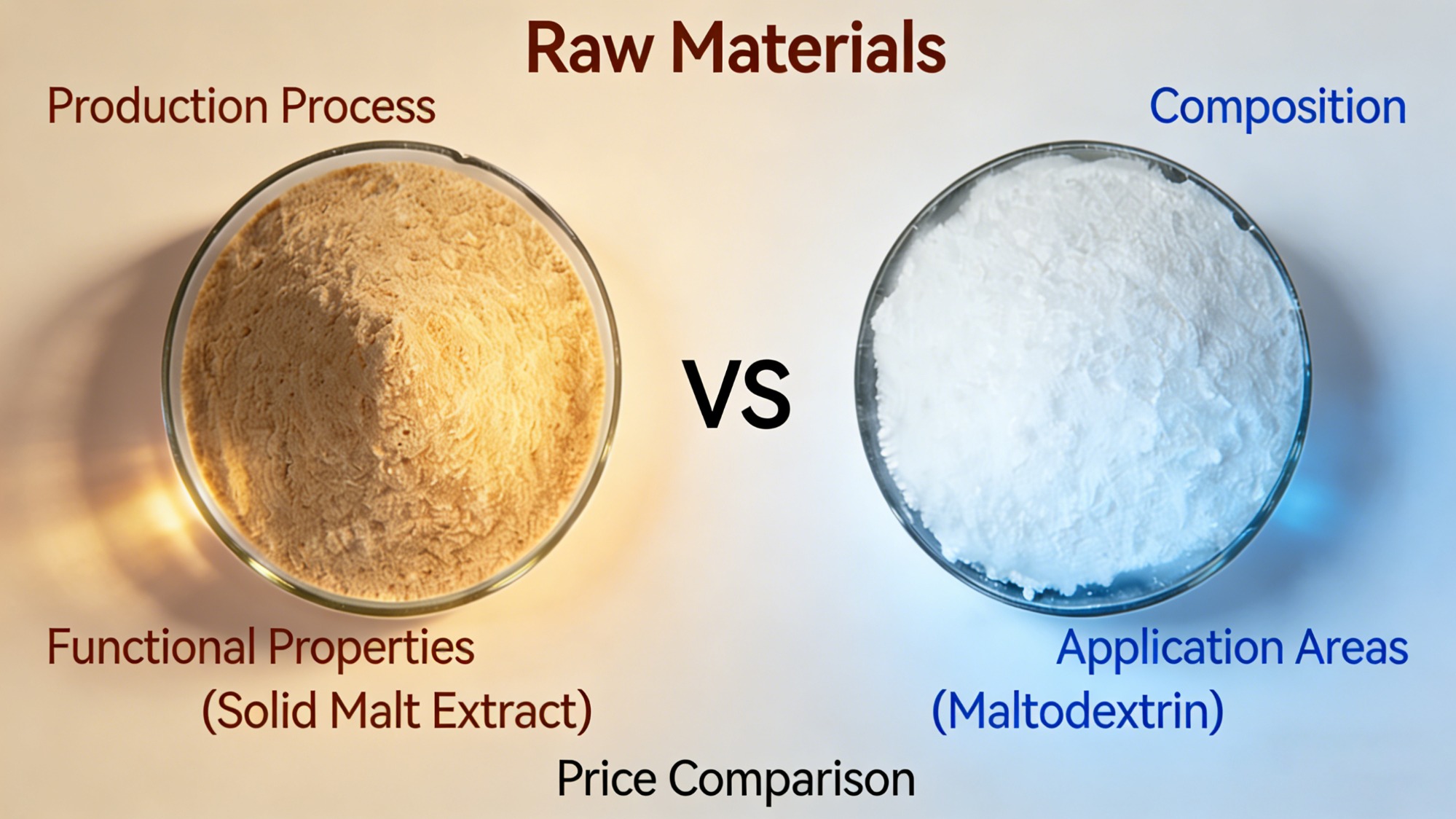
Raw Materials
Maltodextrin
Maltodextrin is typically produced from corn starch, potato starch, or tapioca starch through enzymatic or acid hydrolysis.
l It is a starch hydrolysis product
l The main components are oligosaccharides and small amounts of polysaccharides
l Raw materials are widely available and cost-effective
Solid Malt Extract
Solid malt extract is derived primarily from barley malt.
l Barley undergoes germination, saccharification, concentration, and drying
l Retains natural nutrients from malted grains
l Has a distinct natural malt aroma
Production Process
Maltodextrin
l Produced via enzymatic or acid hydrolysis of starch
l Followed by spray drying into powder form
l The process is simple, highly standardized, and low-cost
Solid Malt Extract
l Requires malting, enzymatic saccharification, filtration, concentration, and drying
l The process is complex and time-consuming
l Higher technical and production costs
Composition
Maltodextrin
l Main components: glucose, maltose, oligosaccharides, and polysaccharides
l Low sweetness
l Neutral taste with no distinctive flavor
l Excellent solubility and moderate viscosity
Solid Malt Extract
l Rich in maltose, glucose, amino acids
l Contains B vitamins and minerals such as calcium, iron, and zinc
l Natural sweetness and malt flavor
l Higher nutritional value
Functional Properties
Maltodextrin
l Thickening agent: improves viscosity and texture
l Bulking agent: increases volume while reducing formulation cost
l Carrier agent: commonly used in powdered beverages to encapsulate flavors or nutrients
l Low sweetness: suitable for sugar-controlled formulations
Solid Malt Extract
l Nutritional enhancement: supplies natural nutrients
l Flavor enhancement: adds malt aroma and mild sweetness
l Natural sweetener: ideal for health-oriented products
Application Areas
Maltodextrin
Widely used across multiple industries, including:
l Beverages
l Infant formula
l Candy and confectionery
l Ice cream
l Seasonings and sauces
l Pharmaceutical excipients
l Its versatility and low cost make it a standard functional ingredient.
Solid Malt Extract
Primarily used in:
Health foods and nutritional supplements
l Infant and baby foods
l Cereals and granola
l Instant powdered drinks
l Bakery products (to enhance aroma and browning)
Price Comparison
Maltodextrin: Low cost due to simple production and inexpensive raw materials
Solid Malt Extract: Higher price due to barley-based raw materials and complex processing
Selection Recommendations
- Choose maltodextrin if your goal is to increase volume, improve texture, act as a carrier, or reduce formulation costs
- Choose solid malt extract if you want to enhance nutritional value, add natural sweetness, or improve flavor profile, especially in health-focused products
- Contact us today for more information.