From Powder to Pill: End-to-End Tablet Compression Strategy
Achieving consistent tablet quality in pharmaceutical manufacturing requires more than just setting a pressure value. The core lies in balancing material characteristics with equipment parameters, optimizing pre-processing steps, and troubleshooting issues such as capping, sticking, and weight variation. This guide walks you through the essential tablet compression techniques from a hands-on perspective.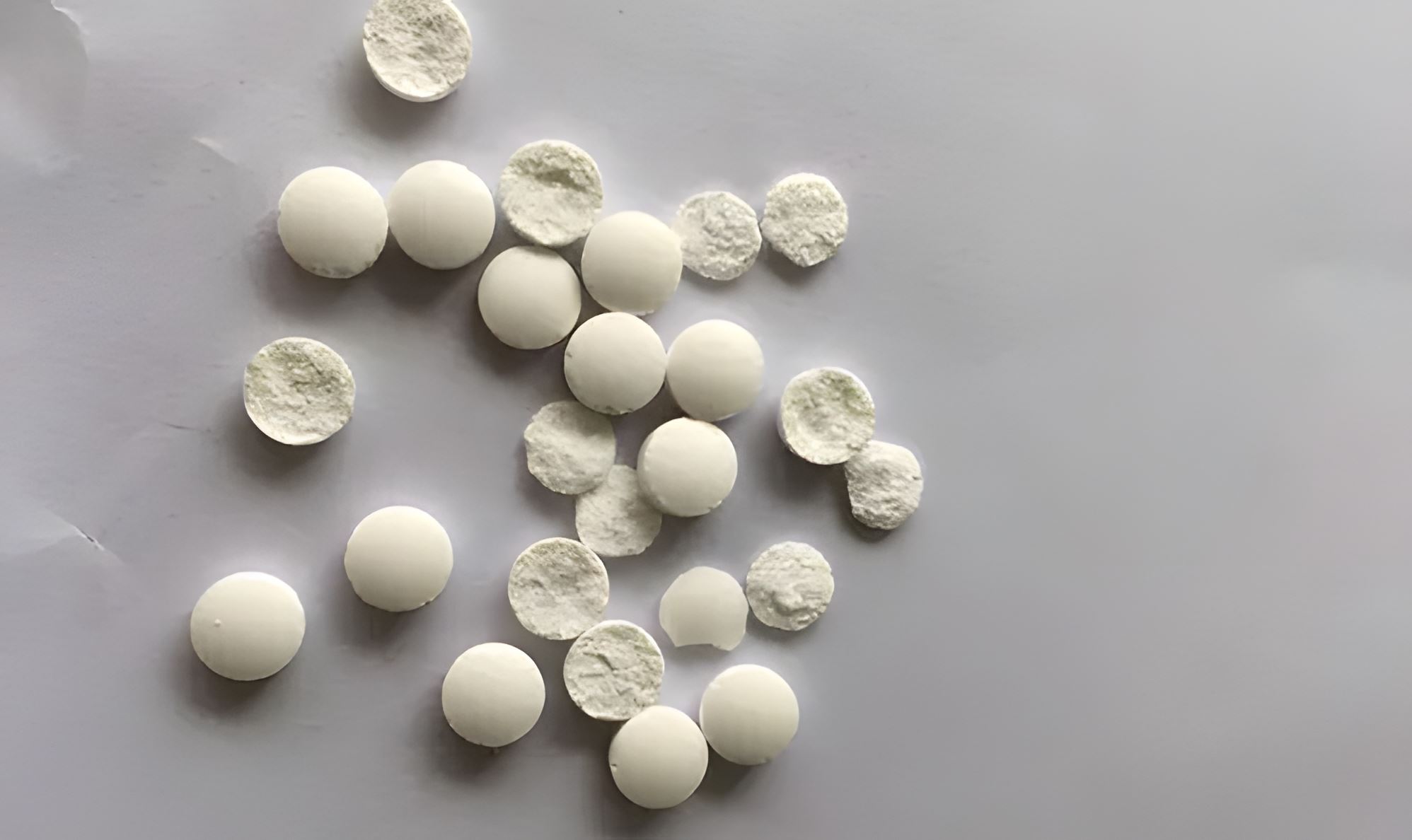
1. Pre-Processing: Foundation of Successful Compression
Proper material handling before compression significantly impacts tablet quality. Key aspects include:
1.1 Particle Size & Distribution (Universal Pulverizer)
Optimal range: 80–120 mesh (approx. 125–180μm)
Too fine: Dust generation, poor flow
Too coarse: Weight and content uniformity issues
Use screening to remove particles <100 mesh and >60 mesh; aim for D90/D10 ≤ 5 for narrow particle size distribution.
1.2 Flowability Enhancement
-
Add glidants: 0.1%-0.5% colloidal silicon dioxide or talc reduces inter-particle friction
-
Granulation:
-
Wet granulation (e.g., fluid-bed): Ideal for sticky APIs
-
Dry granulation (e.g., roller compaction): Suited for heat-sensitive medicines
-
| Flowability Grade | Characteristics | Improvement Method |
|---|---|---|
| Good (<30° angle) | Free-flowing | Direct compression |
| Fair (30°–45°) | Slight clumping | Add 0.2% glidant, mix for 3–5min |
| Poor (>45°) | Severe clumping | Granulate + glidants |
1.3 Moisture Control
- Ideal moisture: 2–5% for most APIs
- Excess moisture (>8%): Risk of sticking
- Too dry (<1%): Fragile tablets → risk of capping
Use ethanol-water spray (5%) to increase moisture or dry under airflow when too wet
2. Equipment Adjustment: Matching Material Properties
Optimizing compression pressure, tablet press speed, and tooling condition ensures smooth production.
2.1 Pressure Setting
-
Pre-compression: 30%-50% of main compression (e.g., 5–7kN for a 15kN main pressure)
-
Main compression:
-
High compressibility (e.g., lactose): 8–12kN
-
Low compressibility (e.g., MgO): 15–20kN (max 80% of press limit)
-
-
Monitor pressure feedback system to ensure <±5% fluctuation
2.2 Speed Control
-
Start slow to check tablet weight and appearance
-
Flowable powders: Up to 30–40 tablets/sec
-
Poor flow materials: 15–20 tablets/sec max
2.3 Tool Maintenance
-
Clean dies with 75% ethanol
-
Replace tooling with scratches or burrs to prevent chipping and weight variation
3. In-Process Adjustments: Live Monitoring Is Key
Adjustments during production prevent bulk failures.
3.1 Tablet Weight
-
Adjust fill depth first (0.1mm = 5–10mg change)
-
Speed: Slower speeds improve fill consistency
-
Material level: Maintain 1/3–2/3 of hopper to avoid air pockets
3.2 Lubricant Use
-
Magnesium stearate: Mix 2–5 min only
-
Overmixing → poor disintegration
-
Premix lubricants with glidants to ensure even coating
4. Troubleshooting Common Issues
| Issue | Cause | Solution |
|---|---|---|
| Capping | High elasticity, fast speed | Increase pre-compression, slow down, add MCC |
| Sticking | High moisture or sticky excipients | Dry powder to 2–5%, polish punches |
| Weight variation | Poor flow, material bridging | Add glidant, install agitator |
| Hard/soft tablets | Wrong pressure or binder | Adjust pressure ±2–5kN, tweak binder |
| Mottling | Poor mixing, lubricant uneven | Extend mixing time, pre-blend lubricants |
Final Takeaway: The Logic Behind Compression Mastery
Tablet compression success lies in the "know your material, control your machine" principle. Follow a structured approach:
-
Material optimization (size, moisture, flow)
-
Parameter calibration (pressure, speed)
-
Live monitoring & micro-adjustment
Apply the "one-change-at-a-time" rule: adjust one variable, observe 100–200 tablets, then reassess. This prevents quality issues and ensures stable production.
- Contact us today for more information.