Glass-Lined Reactors in Food Processing
Glass-lined reactors, also known as enamel reactors, are widely used in the food processing industry due to their excellent corrosion resistance, chemical stability, and hygiene performance. The glass lining provides a smooth, non-reactive surface that prevents contamination, ensuring that food products remain pure and safe throughout the production process. This article explores several real-world applications of glass-lined reactors in food manufacturing, demonstrating how they enhance efficiency, product quality, and safety across different production stages.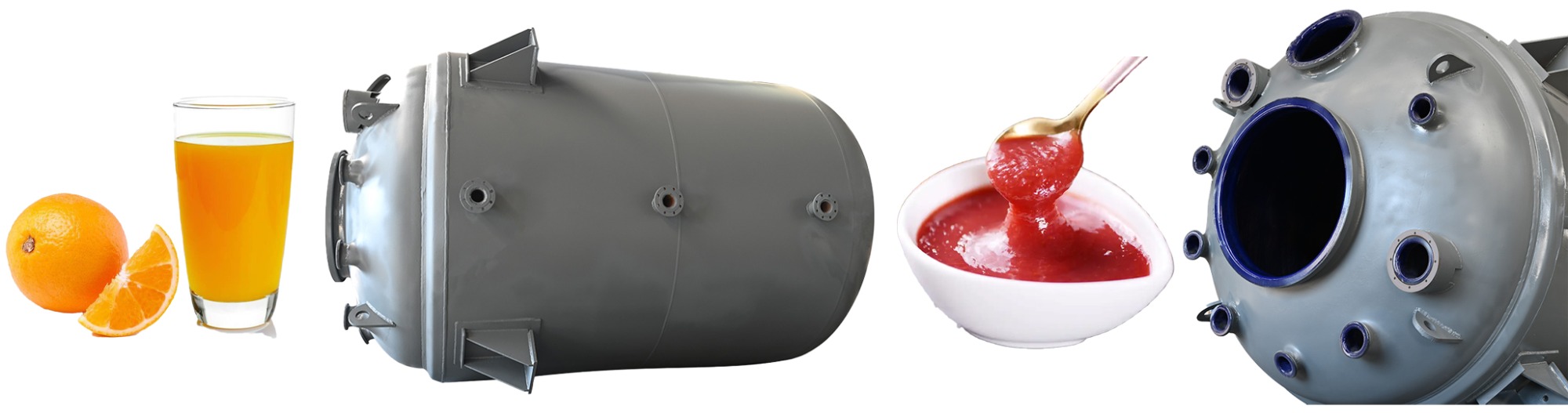
1. Juice Concentration and Processing
In fruit juice production — such as orange, apple, or mixed fruit juices — glass-lined reactors are ideal for vacuum concentration of acidic beverages.
Operating typically at 50–70°C and pH 2.5–4.0, the glass lining prevents any reaction with fruit acids, ensuring the natural color and flavor of the juice remain unchanged.
Case Example:
A fruit processing plant used a glass-lined reactor to concentrate high-acid orange juice (pH = 2.5). Tests showed that metal ion migration was only 1/20 of that in stainless-steel equipment, proving the superior inertness and product purity of the glass-lined vessel.
2. Jam and Fruit Preserve Production
In jam manufacturing, glass-lined reactors are used for fruit pulp heating and concentration. The enamel surface resists acidic corrosion from fruit ingredients and does not release heavy metals, fully complying with food-contact safety standards.
Moreover, the smooth, glossy interior minimizes product adhesion — the residual material rate is less than 1%, resulting in higher yield and easier cleaning.
This makes glass-lined reactors a reliable choice for high-quality fruit jam and puree production.
3. Seasoning and Condiment Manufacturing
During the production of soy sauce, vinegar, and other condiments, several reactions such as Maillard reaction and fermentation occur under controlled heat and pressure.
The jacketed heating system of a glass-lined reactor ensures uniform heat transfer, promoting a stable reaction and enhancing flavor formation.
In addition, the reactor’s chemical resistance protects it from corrosion caused by acidic or alkaline components, significantly extending equipment service life.
This makes glass-lined reactors ideal for condiment fermentation, hydrolysis, and flavor synthesis processes.
4. Food Additive Production
Glass-lined reactors play a vital role in manufacturing food additives like aspartame, benzoic acid, and sodium benzoate.
Their non-reactive glass coating prevents metal ion leaching, ensuring the purity of sensitive compounds.
Through precise control of reaction temperature, pressure, and mixing speed, these reactors improve reaction yield and product consistency.
They are especially valuable in synthetic sweetener and preservative production lines where contamination control is critical.
5. Dairy Fermentation
Glass-lined reactors are also used in fermented dairy processing, including yogurt, cheese, and probiotic beverages.
They provide a sanitary, stable, and inert environment for microbial fermentation, maintaining product quality and ensuring food safety.
The smooth enamel surface resists bacterial adhesion and is easy to sterilize, helping manufacturers meet HACCP and GMP hygiene standards in dairy production.
Conclusion
From acidic fruit juices to complex flavor reactions and fermentation processes, glass-lined reactors have become indispensable equipment in modern food manufacturing.
They combine chemical resistance, thermal stability, and hygienic design, ensuring both process efficiency and product safety.
With increasing global emphasis on food quality and clean processing, the adoption of glass-lined reactors continues to expand across the food industry.
- Contact us today for more information.