Ejection Force and Its Impact on Tablet Hardness and Friability
Ejection Force & Key Tablet Quality Attributes
Ejection force is a critical yet often underestimated parameter in tablet compression. It is closely linked to multiple core quality attributes, including tablet hardness, friability, disintegration time, dissolution behavior, weight variation, and visual integrity. Fundamentally, ejection force reflects the physical state of the tablet after compaction, the interaction between material and tooling, and the overall rationality of formulation and process design.
A stable and reasonable ejection force indicates balanced compression behavior, while abnormal values or fluctuations frequently signal deeper quality risks.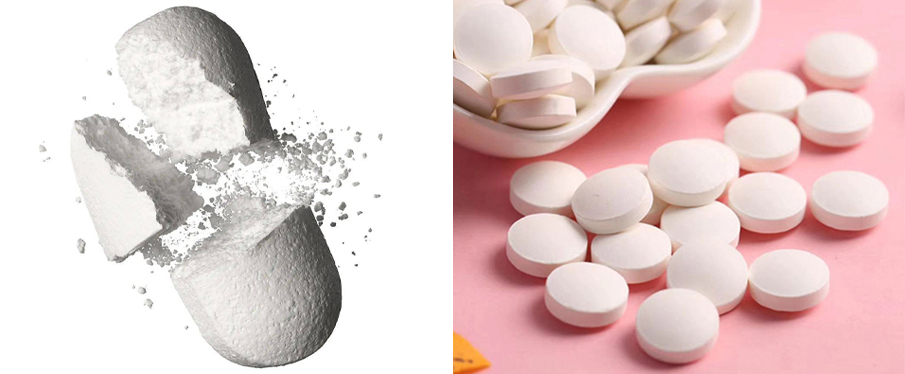
1. Ejection Force and Tablet Hardness
Ejection force generally shows a positive correlation with tablet hardness, though the relationship is not strictly linear. Under appropriate compression conditions, higher tablet hardness leads to greater friction and extrusion resistance between the tablet and die wall, resulting in increased ejection force.
When ejection force becomes excessively high and tablet hardness exceeds specifications, this typically indicates over-compression or low elastic recovery of the material. Tablets produced under such conditions often exhibit delayed disintegration due to reduced porosity.
Conversely, when ejection force is abnormally low and tablet hardness is insufficient, the root cause is frequently insufficient compression force or excessive lubricant content. These tablets tend to be structurally weak, prone to capping, lamination, or breakage during handling.
2. Ejection Force and Friability
Friability evaluates a tablet’s resistance to abrasion and mechanical impact. Its relationship with ejection force is primarily governed by interparticle bonding strength and internal structural uniformity.
Excessively high ejection force increases mechanical stress during tablet ejection. Even when hardness meets specifications, uneven stress distribution can generate residual internal stress, leading to friability failure during downstream processes such as coating, packaging, or transportation.
When ejection force is too low, tablets inherently lack sufficient internal cohesion. In such cases, friability typically exceeds acceptable limits directly, with tablets showing edge chipping, powder loss, or complete breakage.
3. Ejection Force, Disintegration Time, and Dissolution Performance
The relationship between ejection force, disintegration time, and dissolution behavior is rooted in compression density and lubricant distribution.
Excessively high ejection force often results from over-compression, which reduces tablet porosity. Lower porosity restricts penetration of disintegration media, slows water ingress, and impairs drug release. Consequently, disintegration time is prolonged and dissolution rates decline.
On the other hand, abnormally low ejection force caused by excessive lubricant levels can also negatively affect disintegration and dissolution. Lubricants tend to form hydrophobic films on particle surfaces, limiting wetting and hindering penetration of aqueous media into the tablet core, producing delayed disintegration despite lower compression density.
4. Ejection Force and Tablet Weight Variation
Fluctuations in ejection force are a significant contributor to tablet weight variation. Unstable ejection force often reflects inconsistent die filling or process parameter drift during compression.
When ejection force varies from cycle to cycle, it indicates uneven material distribution within the die cavity, resulting in tablets with inconsistent mass. Additionally, excessively high ejection force may induce sticking or punch drag, causing partial die blockage and insufficient filling in subsequent cycles, further amplifying weight variability.
5. Ejection Force and Tablet Appearance Integrity
Among all quality attributes, tablet appearance is the most directly affected by ejection force.
Excessive ejection force increases friction between the tablet and die wall during ejection, leading to defects such as edge chipping, surface scratches, and vertical cracking. Improper punch-to-die clearance can further exacerbate these issues, producing burrs or rough tablet edges.
When ejection force is too low, tablets may lack sufficient mechanical integrity. During ejection, tablets may crack, delaminate, or deform, and material adhesion to the die wall can cause irregular tablet shapes or incomplete surfaces.
Conclusion
Ejection force is not an isolated mechanical parameter but a comprehensive indicator of tablet compression quality. It integrates the effects of formulation design, material properties, lubrication balance, tooling condition, and compression parameters. Abnormal ejection force—whether too high, too low, or unstable—inevitably manifests as defects in hardness, friability, disintegration behavior, dissolution performance, weight consistency, or visual appearance.
Understanding and controlling ejection force is therefore essential for achieving robust tablet quality, stable large-scale production, and long-term process reliability.
- Contact us today for more information.