Why Material Moisture Determines Tablet Friability?
Material Moisture as a Critical Factor Affecting Tablet Friability
Tablet friability is one of the core quality indicators in solid dosage manufacturing. It directly affects production efficiency, transportation loss, and patient safety. Among the many influencing factors, material moisture content acts as an often-overlooked but decisive variable. Its impact on friability is clearly bidirectional: both excessive and insufficient moisture can lead to friability failure. Only when moisture is controlled within an appropriate range can tablet quality remain stable and reproducible.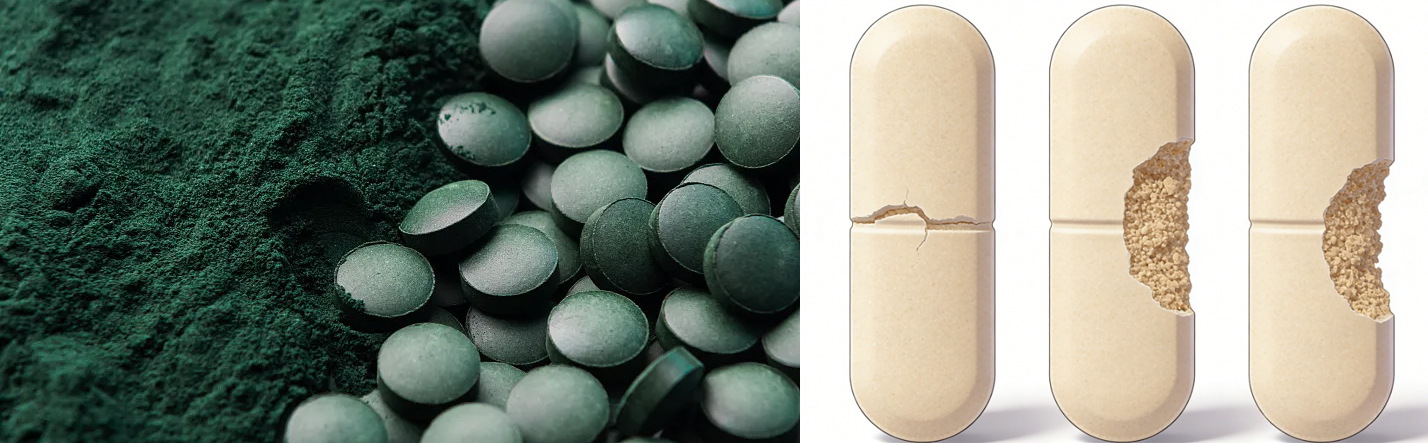
1. Excessively Low Moisture: Weak Interparticle Bonding and Edge Chipping
An appropriate amount of moisture in tablet granules plays a supportive binding role, functioning like a microscopic adhesive that enhances interparticle cohesion. When material moisture is too low, granules become dry, rigid, and brittle. The voids between particles increase, and bonding strength drops sharply.
Tablets compressed from overly dry granules exhibit a loose internal structure and poor mechanical integrity. During friability testing—where tablets undergo repeated tumbling and impact—surface powder loss occurs easily, and tablet edges may chip or fracture entirely. As a result, friability values often exceed acceptable pharmacopeial limits.
This condition is commonly observed in formulations containing highly hygroscopic materials, or when excessive drying temperatures or prolonged drying times during granulation cause excessive moisture loss.
2. Excessively High Moisture: Insufficient Hardness and Structural Instability
Just as low moisture undermines friability performance, excessive moisture can be equally detrimental. When granules contain too much water, they become soft and sticky, leading to multiple downstream issues during compression, such as sticking to punches and significant tablet weight variation.
More critically, excessive moisture leaves behind free water within the tablet structure, weakening interparticle bonding and reducing tablet hardness. Tablets formed under these conditions lack structural stability and are prone to edge breakage or complete fracture during friability testing.
In addition, tablets with high residual moisture may continue to absorb water during storage, increasing the risk of softening, deformation, microbial growth, or mold formation, thereby compromising long-term product stability.
3. Identifying the Optimal Moisture Window for Each Material
Due to differences in hygroscopicity, particle morphology, and inherent binding properties, each formulation has its own optimal moisture range. There is no universal moisture specification that applies to all materials.
Through controlled experimental batches, manufacturers can establish moisture-performance correlations by compressing granules at different moisture levels and evaluating friability, hardness, and structural integrity. The moisture range that delivers the most balanced mechanical performance defines the material’s process window.
Maintaining this window throughout production is essential for ensuring batch-to-batch consistency and stable tablet quality.
4. Moisture Control as a Hidden Protector of Tablet Press Tooling
Abnormal material moisture does not only affect tablet friability—it also accelerates wear and damage to high-speed tablet press tooling.
l When moisture is too high, sticky material tends to adhere to punch surfaces. Over time, this can cause corrosion, surface pitting, and accelerated punch wear, while also leading to tablet defects such as mottling and surface spots.
l When moisture is too low, excessively hard and abrasive granules increase friction between punches and dies, significantly shortening tooling service life.
Effective moisture control, combined with properly selected tooling, is therefore essential for maintaining stable, high-speed tablet production.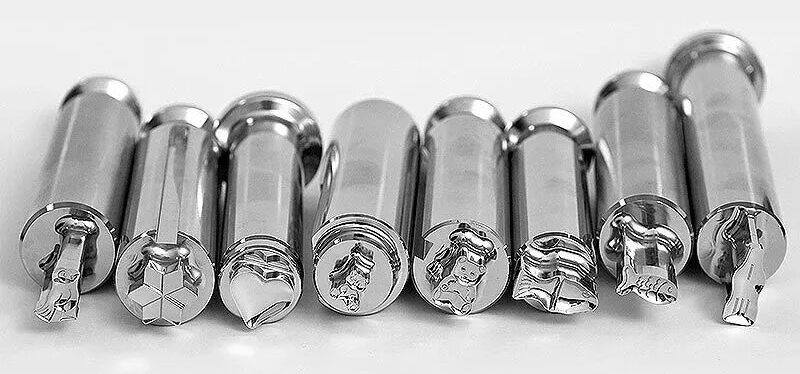
Tooling Compatibility and Long-Term Production Stability
Balancing material moisture and tooling performance is key to achieving efficient and reliable tablet manufacturing.
These tooling solutions are characterized by high wear resistance, precision manufacturing, and extended service life, helping pharmaceutical manufacturers reduce operating costs while maintaining consistent product quality.
Conclusion
Material moisture is a hidden yet decisive factor influencing tablet friability. Whether too low or too high, moisture imbalance disrupts internal tablet structure, compromises mechanical strength, and accelerates tooling wear. Only by maintaining moisture within a well-defined process window can manufacturers ensure low friability, stable hardness, long-term storage stability, and efficient production.
- Contact us today for more information.