How Cold Trap Temp Affects Lab Freeze Dryer Performance?
Understanding Key Technical Factors That Impact Laboratory Freeze Dryer Performance
Vacuum freeze dryers are precision instruments where temperature, vacuum level, and thermal uniformity all play crucial roles in ensuring effective and consistent freeze-drying outcomes. In this post, we’ll explore how cold trap temperature, vacuum level, cooling rate, and shelf uniformity impact the freeze-drying process — helping you make informed equipment choices.
❄️ The Role of Cold Trap Temperature in Freeze-Drying
The cold trap is the part of a vacuum freeze dryer that captures moisture released during sublimation. In theory, the lower the cold trap temperature, the stronger the water vapor capture capacity. However, lower temperatures also place higher demands on the refrigeration system, increasing both equipment cost and operating expenses.
Common cold trap temperatures in lab-scale freeze dryers
-
Around -56°C: Suitable for most conventional freeze-drying applications.
-
Around -80°C: Recommended for sensitive or special materials requiring ultra-low temps.
Experimental Findings
Reducing the cold trap temperature from -35°C to -55°C significantly enhances moisture capture. However, further lowering below -55°C yields diminishing returns.
✅ Conclusion: Unless you are working with very specific materials, a cold trap temperature of around -60°C is a highly efficient and cost-effective choice.
The Importance of Vacuum Level
Vacuum level reflects the system's leak tightness and pumping efficiency. While past thinking assumed “the higher the vacuum, the better,” the modern industry consensus is that vacuum should be maintained within an optimal range.
-
Too high a vacuum reduces heat transfer efficiency, which can actually slow down drying.
-
However, the freeze dryer should achieve a vacuum level of at least 15 Pa under no-load conditions.
Cooling Rate: Indicator of Refrigeration Strength
The cooling rate indicates the efficiency of the refrigeration system. Under no-load conditions, the cold trap should reach its target temperature within one hour.
Example:
For a freeze dryer with a cold trap temperature of ≤ -56°C, the system should be able to reach this temperature within 60 minutes from the start of cooling.

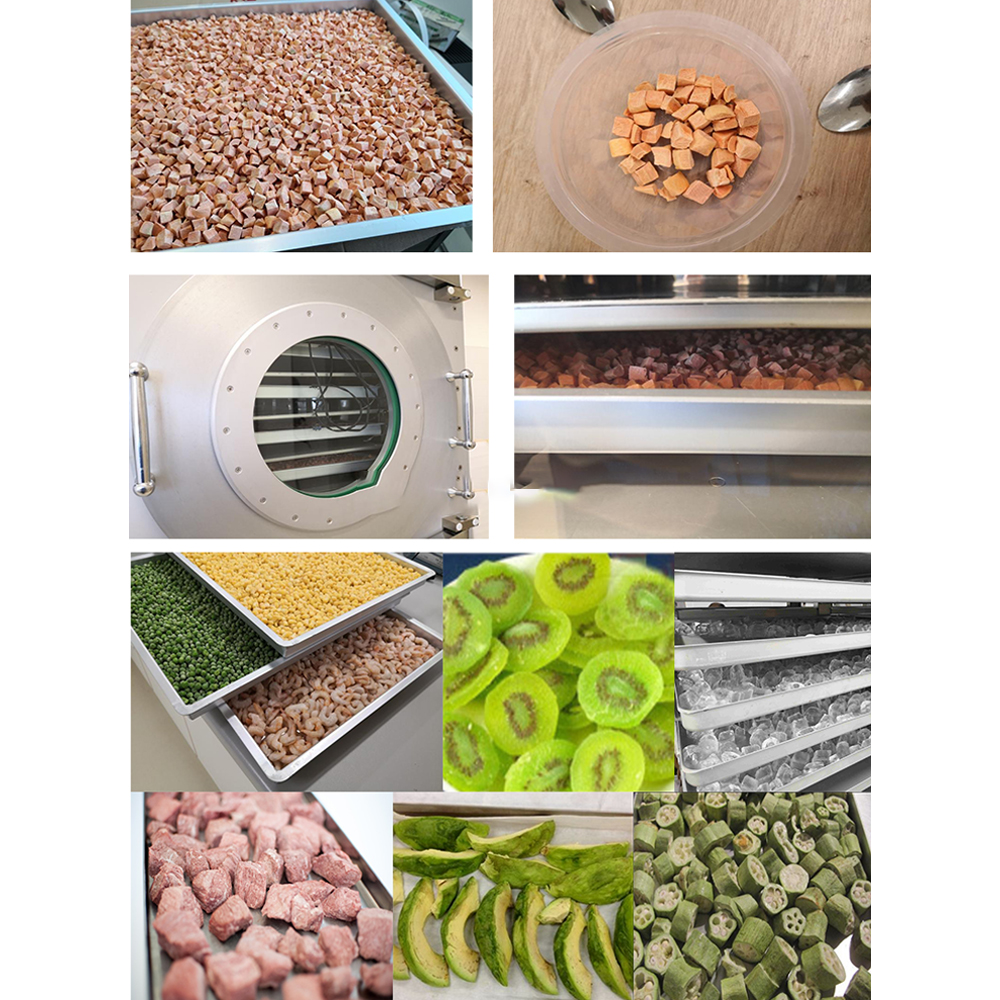
Shelf Temperature Uniformity Affects Product Consistency
The flatness and uniformity of shelf temperatures directly impact the uniformity of the final freeze-dried products.
There are two types of shelf temperature control systems:
-
Heater-based control
-
Circulating intermediate fluid control
Freeze dryers with hollow-layer shelves and intermediate fluid circulation offer better temperature uniformity and even heating/cooling, resulting in more consistent product quality.
✅ Final Takeaway
When selecting a laboratory freeze dryer, don’t just look at the price or capacity. Consider these four key parameters:
-
Cold trap temperature
-
Vacuum level
-
Cooling rate
-
Shelf temperature uniformity
Together, they determine not just how your equipment performs — but how reliably and reproducibly your products will dry.
- Contact us today for more information.