Tablet Hardness Optimization Techniques
Enhancing the mechanical strength of tablets—primarily reflected in hardness, friability resistance, and capping resistance—is a critical goal in solid dosage formulation and manufacturing. The core principle is simple: increase the inter-particle bonding strength, reduce porosity, and improve compaction behavior while maintaining dissolution, bioavailability, and stability. 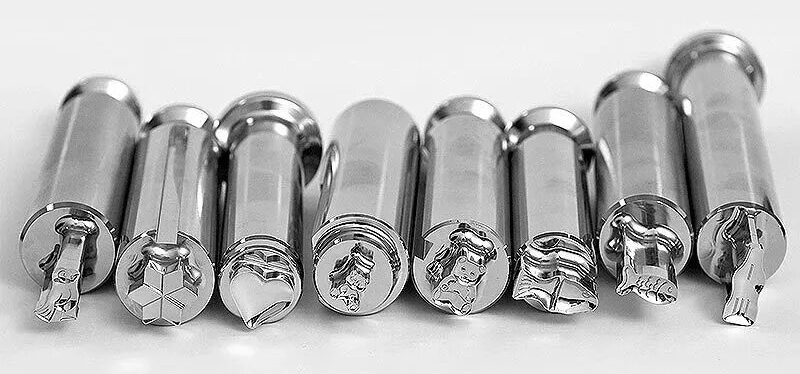
1. Optimize Granulation: Strength Starts From the Granules
Granulation fundamentally determines tablet strength. The goal is to produce granules that are dense, cohesive, flowable, and low in fines, ensuring uniform compaction and robust bonding during tableting.
1.1 Choose the Right Granulation Method
Wet Granulation – The Best Choice for High-Strength Tablets
Wet granulation forms liquid bridges that convert into solid bridges during drying, providing superior inter-particle bonding.
Ideal for:
l Chewable tablets
l Sustained-release tablets
l High-hardness formulations
l APIs with poor compressibility
Dry Granulation (Roller Compaction)
Bonding relies solely on pressure, so strength is lower vs. wet granulation.
To improve strength:
l Increase roller pressure (avoid over-compression to prevent brittle granules)
l Add higher levels of strong binders (e.g., PVP K30, HPMC)
Direct Compression
Low cost and simple, but:
l Highly dependent on excipient quality
l Often produces weaker tablets unless special DC-grade excipients are used
1.2 Optimize Binder Type and Concentration
Binders act as “granule glue”. Choosing correctly is essential for strength.
High-strength binders
l HPMC 2–5%
l PVP K30 1–3%
l Starch Paste 8–15%
Best for weakly compressible APIs.
Medium-strength binders
l MCC (Microcrystalline Cellulose)
l Dextrin
Good for balancing hardness with disintegration.
Key Binder Principles
Binder too low → weak granules → capping, chipping
Binder too high → overly hard granules → slow dissolution
Rule of thumb: granules should form a soft mass when squeezed, then break easily with light pressure.
1.3 Control Granule Size Distribution
Ideal granule size: 100–300 μm
Fine powder (<75 μm) must be controlled to 5–10%:
l Too much fines → low bonding strength → brittle tablets
l Too few fines → poor compactibility
Post-granulation sizing:
Use 1.0–1.5 mm screen to break agglomerates and improve flow.
1.4 Optimize Drying Conditions
Granule moisture critically affects tablet mechanical properties.
Too wet
l Sticky granules → sticking/picking
l Internal stress → delayed capping or cracking
Too dry
l Brittle granules → poor plastic deformation
l Weak bonding capacity → low hardness
Target moisture levels
l Lactose-based granules: 1–3%
l MCC-based granules: 2–4%
Best drying method
l Fluid bed drying: uniform moisture, consistent strength
l Avoid static oven drying (prone to over-drying edges)
2. Excipient Optimization: Build a Strong Tablet Skeleton
Excipients are not fillers—they are the architectural framework of tablet strength.
2.1 Choose High-Strength-Friendly Fillers
Microcrystalline Cellulose (MCC PH101/102)
l Best compressibility
l Forms strong plastic deformation bonds
l Improves hardness and reduces capping
Typical usage: 30–70%
Dicalcium Phosphate (DCP)
l High rigidity
l Produces high-hardness tablets
l But brittle → must combine with MCC (1:1)
Crystalline Lactose
l Dense and stable
l Improves friability resistance
Avoid: spray-dried lactose (more porous → weaker mechanical strength)
Avoid overly porous excipients
l Fumed silica
l Light magnesium oxide
These increase porosity → reduce tablet mechanical stability.
2.2 Lubricant Optimization: Prevent Over-Lubrication
Magnesium stearate is widely used, but OVERUSE significantly weakens tablet hardness by blocking bonding surfaces.
Recommended amount:
0.2–0.5% (optimum ~0.3%)
Better alternatives
l Sodium stearyl fumarate (0.5–1%)
→ minimal impact on hardness
Advanced lubrication strategy
l Internal addition 0.2% + external addition 0.1%
This reduces surface coverage and preserves bonding strength.
2.3 Select the Right Disintegrant
Over-use of high-swell disintegrants weakens mechanical strength.
Avoid excess (>8%)
l Croscarmellose sodium (CCNa)
l Crospovidone
Better choice for high-strength tablets
l Sodium starch glycolate (3–5%)
l Super-disintegrant "inside + outside" strategy
2/3 internal
1/3 external
This preserves strength while ensuring rapid disintegration.
3. Optimize Compression Parameters: Transform Granules Into a Dense, Strong Tablet
Compression is where granules become a solid mass. Optimizing mechanical forces is essential for achieving high tablet strength.
3.1 Set the Correct Compression Force
Within limits, higher pressure = higher hardness.
Recommended compression force
l Standard tablets: 10–15 MPa
l High-strength tablets: 15–25 MPa
l Chewable tablets: 25–35 MPa
But excessive pressure causes problems
l Slow dissolution
l Elastic recovery → capping
l Internal stress accumulation
Thus pressure must be validated through Hardness–Dissolution–Friability design experiments.
3.2 Control Compression Speed
High speed reduces dwell time → insufficient bonding.
Recommended speeds
l Standard tablet press: 20–40 rpm
l High-speed rotary press: 50–80 rpm
Granules must flow freely to avoid weight variation and weak tablets.
3.3 Punch and Die Maintenance
Punches
l Must be smooth, scratch-free
l Rough punches → stress concentration → edge chipping
l Routine polishing required
Dies
l Clean inner walls → uniform compaction
l Scratches cause sticking and fragile edges
Healthy tooling prevents 70% of mechanical defects.
4. Additional Critical Controls: Prevent Invisible Strength Loss
4.1 Control Environmental Conditions
Humidity
l Ideal: 45–60% RH
High humidity → soft granules → capping
Low humidity → brittle granules → weak hardness
Temperature
l Ideal: 20–25°C
Too warm → magnesium stearate melts → lubrication failure
4.2 Tablet Geometry Optimization
l Very thin tablets (<2 mm) → prone to edge breakage
l Very large tablets (>12 mm) → uneven stress distribution
Ideal thickness: 2–4 mm
Switch to oval or capsule-shaped tablets when large size is required.
4.3 Post-Compression Treatment
Film Coating
A thin HPMC-based coating improves:
l Friability
l Resistance to abrasion
l Anti-capping performance
Recommended weight gain: 1–3%
Aging/Curing
Store tablets at 25°C / 60% RH for 24–48 hours:
l Internal stress relaxes
l Bonding strengthens
l Hardness increases naturally
Especially beneficial for dry-granulated tablets.
Conclusion
Improving tablet mechanical strength requires a holistic, multivariate engineering approach.
The core strategy combines:
l Strong granules
l High-strength excipients
l Optimized binder and lubricant ratios
l Controlled drying
l Precise compression force and tooling quality
l Environmental and post-processing optimization
When applied systematically, manufacturers can significantly reduce:
l Capping
l Chipping
l Low hardness failures
l Breakage during packaging and transport
Resulting in higher stability, better product quality, and improved manufacturing efficiency.
- Contact us today for more information.